
Mestre Anderson Scaldaferri Brazil Kummooyeh Federation

Mestre Anderson Scaldaferri Daehan Hapkido Association
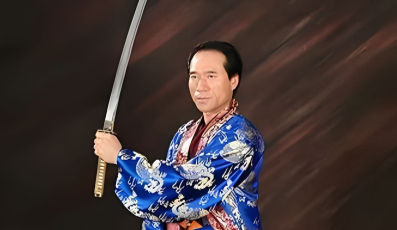
Mestre Anderson Scaldaferri Brazil Kummooyeh Federation


INTERVIEW WITH THE NEWSPAPER
(MOO YEA SIN MOO)
WITH GRANDMASTER IN SUN SEO (2006)
Part 1:
The unification of Hapkido will elevate it as an international martial art.
In this cold weather, how are you doing?
I am still very confident about my health. Every year, I travel around the world to visit affiliated schools and hold 7-hour seminars daily, where I personally demonstrate the techniques. Even now, considering that I practice stretching and train for 2 hours a day, I find myself in good health. When I'm abroad, foreigners are first surprised by my age, and they are surprised again when I demonstrate my techniques.
No one will contest the statement that you are the founder of Hapkido. When did you start?
I first met my teacher, Grandmaster Choi Yong Sul, in 1957 and received my 1st dan in 1958. Since 1945, GM Choi Yong Sul had been promoting Hapkido, but it was when he met Mr. Suh Bok Sup in 1953 in Daegu that he opened a dojang on the second floor of Mr. Suh's (his father’s) brewery. This marked the beginning of dojangs in Korea. After that, the second dojang was opened, and that is where I trained.
When did you open your first school?
In 1961. I opened the Hapkido Korea Kuk Sool Won Dojang. At that time, Grandmaster Ji Han Jae opened his first dojang, called Sung Moo Kwan Hapkido in Andong, prior to mine, and in 1959, he opened the dojang called Sung Moo Kwan in Seoul. Master Kim Moo Hong, a less experienced instructor than Ji in the art, became independent in 1961 and opened the Sin Moo Kwan Hapkido Dojang. This was the beginning of the three branches of Hapkido that exist today.
In the beginning, were there periods of division in Hapkido?
Yes, but shortly after, there was an effort for unification. With Grandmaster Choi at the center, we agreed that "it shouldn’t be like this" and formed the Da Han Kido Hae. During that period, we received permission from the Ministry of Education, and GM Choi Yong Sul was elected the first honorary president, with Mr. Kim Kyung Dong elected president. However, this still did not achieve unification.
I believe the main reason we failed to unify was due to the resistance of the first generation of martial artists in Korea at that time. If we had all taken a step back and worked together, unification would have been possible. Instead, many of those involved were young and hasty. In retrospect, it was very regrettable, and a great opportunity was lost.
Was there another brief period when it seemed unification was possible? Did Mr. Kim Moo Joong’s appearance seem significant?
At that time, the Sung Moo branch of Hapkido called itself "Dae Han Hapkido," and Sin Moo Kwan called itself Han Kuk Hapkido. They united under the name "Dae Han Min Kuk Hapkido," with Mr. Kim participating in the unification. However, at that time, they couldn’t embrace the Dae Han Kido Hae and failed because they couldn’t achieve full unification. At that time, Kim Moo Joong declared he would make the combined Hapkido organization bigger than the Kukkiwon, but of course, that did not happen.
You were the president of the Dae Han Kido Hae for a long time. You must remember many events?
I became president of the Dae Han Kido Hae in 1983. At the beginning of my tenure, one of my goals was to present the idea that the term "Dae Han Kuk Sool Won" would be a more appropriate term than "Hapkido" to represent the breadth of martial arts practiced under the control of Kido Hae.
We use the term Hapkido, and Japan uses the same term (Aikido and Hapkido share the same characters in Chinese), and I thought it would be a better name for our martial arts and tried to change it. However, the government would not grant us permission for two reasons. First, the name Hapkido was deeply ingrained in the Korean sentiment. Second, the meaning of the words Kuk Sool Won (Korean Martial Arts Association) was considered too generic.
Even with these frequent discussions, we were unable to unify Hapkido during my presidency of Kido Hae.
If the first generation couldn’t achieve unification, do you think it’s possible now?
I believe it is possible. There are many Hapkido organizations, but in reality, only a few are significant in terms of the number of schools and influence. I intend to form a kind of network/alliance with the first generation of leaders from the different Hapkido organizations and styles so that we can socialize and interact. By doing this, it will naturally help achieve unification. Also, with the registration of Hapkido in the Korea Sports Association, we will have more visibility for Hapkido in Korea.
Since you have a long history in martial arts, can you share some memorable episodes?
When I was young and had just opened a dojang in Pusan, there was a famous guy (troublemaker) in my area, renowned for his fighting skills. He said he would beat me in a fight. So I trained and waited for the right opportunity to meet him. Then, one early morning, I encountered him face to face, and we started fighting. I applied an efficient technique and easily defeated him. After I defeated him with ease and effectiveness, he said, "I will treat you like my older brother for life." There were many incidents like this, and many students who eventually joined my school approached me in that way. There were many difficulties and dangers in the early days of Hapkido, but it’s nice to see how it all turned out.
I am curious about the current situation of the Hanminjok Hapkido Association?
Currently, we have around 350 schools in Korea and many more abroad. Thanks to the support of many masters in our organization, both in Korea and overseas, we have grown incredibly fast over the past 3 years. Moving forward, I will work even harder to continue restoring Hapkido positively. Stay tuned, as the Hanminjok Hapkido Association will become the best Hapkido organization.
Any plans for your organization in the near future?
On April 15th and 16th, we will host an International Hapkido Competition with over 20 countries competing. Not just with words but with action, we are fighting to be a positive example for other organizations through the various events and programs in which we will take part.
Can Hapkido achieve the international success that Taekwondo has?
Certainly! Many people say that Hapkido's self-defense techniques are superior and more complete than modern "sport-oriented" Taekwondo, and this is very evident because so many martial artists from other styles seek to learn Hapkido and earn Dans in Hapkido. The reason such a great martial art like Hapkido is not growing more is because it is not unified. It is very important to achieve unification soon, preserve the techniques, improve them, and announce to the world, "This is Hapkido." If this is done, we can progress as grandly as Taekwondo. I would also like to take this opportunity to once again express that unification is crucial soon, and that all practitioners of this art should take on this mission with courage.
The new year of 2006 is here, do you wish to say anything more to martial artists?
Martial artists should always be ready to serve others and should always keep in mind how necessary it is to be good examples. We need to know that it is more important to have ethics and respect than simply learning another technique. It is especially important to respect seniors and love juniors. I hope you all have plenty of these positive thoughts and naturally make an effort to apply them in your daily lives. I wish you prosperity and good health in the new year.
Part 2
"I chose Hapkido for my life, instead of a stable job."
"Making the decision for a career."
When I graduated from the Commercial High School in 1960, I was torn between starting a career or pursuing martial arts. The high school I graduated from was the best commercial school at that time in Korea. At that time, Korea was a very poor country. Because of my education, finding a good job was not a problem for me, but I was deeply concerned about the direction of my life. After much thought, I decided to dedicate my life to martial arts, that is, Hapkido. In order to become the best in my chosen path, I trained more than 10 hours a day, perfecting my knowledge and skills in Hapkido.
In December 1964, just a few months before I was honorably discharged from the Korean Army, I was chosen to go to Vietnam. I served in Vietnam and returned to Korea, where I completed my duty. I received many job offers. I passed the selection exam for a bank, was approved for government jobs, and was even recommended to the Korean Intelligence Agency. However, I promised to dedicate my life to Hapkido and help it develop as the best Korean martial art. In 1965, I was appointed as the master of Hapkido Kuk Sool Won.
THE TRAINING METHODS OF HAPKIDO KUK SOOL WON IN THE 1960s
My daily training was: practicing self-defense techniques, striking, kicking, for 6 hours, and forms for 4 hours. For self-defense technique training, I practiced with students and also took advantage of these occasions to sharpen my skills in real fight situations. Because of this, all our students became excellent in fighting and self-defense techniques, which helped them realize the full strength of Hapkido.
My favorite kick is the spinning kick, and last February, I demonstrated this kick at my seminar in the United States. Going back to the 1960s, I used to practice 3,000 spinning kicks a day to perfect this kick for use in real fight situations. Looking back, it was indeed a very rigorous training program. However, I wanted to make sure my kicks were applicable in real-life situations, and the only way to achieve that goal was to practice patiently. I believe it was precisely because I practiced all those kicks back then that I am still able to execute the spinning kick at my age.
When I was appointed as a master in 1965, I weighed 71 kg, but after increasing my training hours to 10 hours per day for 3 years, I dropped to 51 kg. With this weight, my body was all muscle, and I had lost almost all the fat in my body. I believe the severity of my training, along with the lack of nutritious food at that time, contributed to this. In the 1960s, most dojangs were very poor, and few had mats or other equipment. Most masters lived in their dojangs.
There were about two dozen students who lived in the dojang in order to train. Often, it was difficult to manage the expenses because of so many students living with you, but this also allowed you to teach them excellent techniques and martial spirit, thus forming very capable instructors in a short period. This allowed Hapkido Kuk Sool Won to spread Hapkido rapidly throughout Korea in the 1960s.
I trained with many masters who were instrumental in spreading Hapkido across Korea. Some of the Masters and schools they established include:
-
Master Lee, Han Chul (Suh Dae Moon Dojang, Seoul), 1964
-
Master Kim, Woo Tak (Ul Ji Ryo Dojang, Seoul), 1964
-
Master Lee, Joo Bang (Jong Ryo 5 Ga Dojang, Seoul), 1963
-
Master Pak, In Suk, Master Cho, Chang Hyung (Kyong Ju Dojang), 1963
-
Master Seo, In Suk, Master Chung, Jin Sook (Yeo Soo Dojang), 1964
-
Master Seo, In Suk, Master Jang, Myong Ho, Master Kim, Sae Joon (Mok Poe Dojang), 1965
-
Master Lee, Jong Oh (Seo Myun, Busan Dojang), 1966
-
Master Seo, In Suk, Master Lim Hee Ee, Instructor Kim, Yong Bong, Instructor Lee, Yoon Woo (Kun San Dojang), 1966
-
Master Byun, Jong Won (Dan Shin Dong, Busan Dojang), 1966
-
Master Kim, Chang Soo (Kim Je Dojang), 1966
-
Master Oh, Soo Bok (Wool San Dojang), 1967
-
Master Cho, Jae Soo (Dong San Dong, Busan Dojang), 1967
-
Master Kang, Kang Jung, Master Cho, Ja Rong (Young Doong Pyo, Seoul Dojang), 1967
-
Master Kim Seong Jin (Sa Dang Dong, Seoul Dojang), 1968
-
Master Byun, Sae Ki, Master Pak, Jung Kyu (Ma San Dojang), 1968
-
Master Lim Kyu Uk (Mil Yang Dojang)
There were many other masters who were also essential in the proliferation of Hapkido during those early days, and for those whom I may have inadvertently forgotten, I offer my apologies.
On this occasion, I want to reiterate that those times were difficult, and starting a Hapkido dojang required an extremely hard effort. This is a fact for which I hope the later generations of Hapkido masters will have understanding and respect.
Translated by Mr. Alcione Prestes Costa
Former dedicated practitioner and intense researcher and scholar of Korean martial arts.