
Mestre Anderson Scaldaferri Brazil Kummooyeh Federation

Mestre Anderson Scaldaferri Daehan Hapkido Association
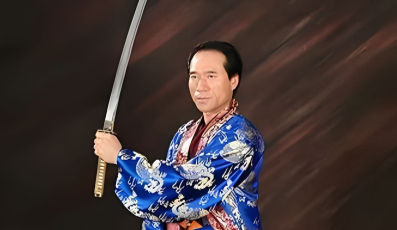
Mestre Anderson Scaldaferri Brazil Kummooyeh Federation


TAEKWONDO ITF "WHO`S WHO"
"TAEKWONDO." A Correct, Valuable, Accurate, and Extraordinary Chronology of the Art,
A truly beautiful and accurate lesson in history.
ITF "WHO'S WHO"
The Korean military officer CHOI HONG HI (1918-2002), Major General of the Infantry Division of the Armed Forces of the Republic of Korea, promoted from Brigadier General to Major General exactly in 1954. In 1953/1954, he organized the legendary, famous, and historic 29th Infantry Division on Jeju Island, a division that became widely known as the Taekwondo Division. He also founded the historic and legendary school OH DO KWAN, with the support of Nam Tae Hi, initially restricted to the military.
He convened and presided over the historic Assembly on 11.04.1955, where he suggested the name Taekwondo for the art. In March 1959, he led an official mission from the Government of the Republic of Korea, a team formed by the best military experts from the Oh Do Kwan school, to demonstrate the art in Vietnam and Taiwan.
The success of the mission was total, impressive, becoming one of the most important and outstanding events in the history of the art. Exactly on September 3, 1959, Choi Hong Hi founded the Korea Taekwondo Association, becoming its first president, which was formalized on 14.09.1961 by a decree from the president, also General Park Chung Hee (1917-1979).
Some art historians mistakenly cite 1965 as the year the Korea Taekwondo Association was formed, which is not correct, as General Choi founded the Korea Taekwondo Association on exactly September 3, 1959, and in 1962, he was promoted to ambassador in Malaysia. At this point, the main leaders changed the name of the Korea Taekwondo Association to the Korea Tae Soo Do Association. When the general returned in 1965, he was elected president of the Korea Taesoodo Association and immediately changed the name back to the Korea Taekwondo Association.
Choi Hong Hi created the famous and beautiful Hyungs (forms), initially 20, later completing them with four more. Nine referring to Gub (colored belts) and 15 to Dan (black belt), now called Tulls, a total of 24 (from Tchon Ji to Tong Il). In the early 1980s, he replaced the Kodang form of 39 movements, the third of 2nd Dan, with a new one called Juche.
On 22.03.1966, he founded the International Taekwondo Federation in Seoul. To internationalize and spread the art, General Choi Hong Hi, still in the Republic of Korea, selected the best instructors from Korea and organized intensive master training courses internationally, sending these best experts almost everywhere in the world. For Brazil, Sang Min Cho in June 1970, who founded the first Taekwondo academy in Brazil, the famous Liberdade Academy in São Paulo city.
Soon after, other Korean masters arrived: in 1971, Sang In Kim, Kum Joon Kwon, Woo Jae Lee, Gum Mo Bang, Hui Sub Lee, Ke Joon Lee, Kwang Suh Shim, all officially sent by the International Taekwondo Federation, meaning these are the true pioneers of the art in our country.
Great recognition is due to the effort, effectiveness, dedication, and great commitment of the extraordinary master Woo Jae Lee in spreading, organizing, and structuring the art in our country.
This master was sent by General Choi to Brazil through the highest entity that controlled the art in the world at that time, the International Taekwondo Federation, arriving in Brazil in November 1971, and in February 1972, he settled in Rio de Janeiro.
In 1972, disagreeing with the dictatorship, tyranny, authoritarianism, and corruption of also General Park Chung Hee (1917-1979), Choi Hong Hi wisely self-exiled in Canada, moving the ITF headquarters to Toronto, Ontario. In 1985, he moved the headquarters to Europe, to Vienna, Austria.
In 2002, already in serious health condition, Choi chose his homeland to die, as he resided in the city of Mississauga, Greater Toronto. That is, he requested permission to be buried in the Republic of Korea, but the government did not respond clearly. On the other hand, the Democratic People's Republic of Korea proposed to bury him in the Martyrs’ Cemetery with military honors, considering the beautiful and heroic role Choi played during the Japanese domination, when with great bravery, patriotism, heroism, and courage, he was intensely part of the liberation movement of the Korean people, which led to his imprisonment in a Japanese prison for 9 months.
Therefore, Koreans descend from various Mongolic tribal groups that migrated from the north (current Manchuria) in prehistoric times and soon merged into a homogeneous and distinct race, with traits that differentiate them from the Chinese and Japanese. Koreans are united by a single language, a single cultural tradition, and a long history that dates back thousands of years.
The Korean people have a strong sense of independence, diligence, patriotism, and solidarity generated over time by the teachings of Confucianism. A recent report by the ILO (International Labor Organization) states that Koreans are the hardest-working people in the world, which is a source of pride and the main reason for their success. However, they are a generous and warm people, with a sense of fraternity and love for music and dance.
It is worth noting that until the end of World War II (1945), there was no North or South Korea, just KOREA. The Korean ethnicity is considered the most homogeneous on Earth: same origin, same history, same physical characteristics, same language, same alphabet, which suffered the terrible Japanese domination officially through a protectorate treaty signed in 1905 and the Annexation Treaty signed on 17.08.1910 and enacted on the 29th. On the other hand, the Japanese emperor signed the unconditional surrender on exactly August 15, 1945.
A free and independent Korea had been promised by the Allied Powers, namely the United States, Russia, the United Kingdom, and China, through the Cairo Declaration and the Potsdam Declaration made on November 27, 1943, and July 26, 1945, respectively. Unfortunately, this did not happen, meaning this promise was not fulfilled, and the formalization of the two sides took place in 1948. General Choi passed away on June 15, 2002, from stomach cancer in Pyongyang at the age of 83.
HIERARCHY OF GENERAL CHOI'S ITF DURING HIS LIFETIME
The Korean RHEE KI HA was the first Korean to leave the Republic of Korea with the official title of Taekwondo instructor, a title explicitly stated in his passport. Others had left earlier but not with this official designation. He served in the Korean Armed Forces and, for a time, was a bodyguard to General Choi himself. Known for his strong physique, he was close to the General’s children. He settled in the United Kingdom and was promoted to 9th Dan by General Choi on July 1, 1997, becoming one of only three Koreans to receive the highest rank directly from the General.
The Korean HWANG KWANG SUNG began martial arts at age 11. He served as a captain in the Republic of Korea Army during the Vietnam War and was an instructor for the renowned Black Tigers. Hwang was one of the Korean instructors selected by General Choi to participate in the first international master course organized by the General himself, with the mission of officially spreading Taekwondo worldwide. He settled in Manchester, Connecticut (USA), and was awarded the 9th Dan by General Choi on December 8, 1997.
The Korean PARK JONG SOO participated in the historic 1965 official government mission of the Republic of Korea, led by General Choi, which showcased demonstrations by the country’s top experts across Asia, Europe, and the Middle East. In the Korean Army, he was an instructor for both the famous Black Tigers and the Military Police. In 1968, he relocated to Canada, where he built one of the largest Taekwondo centers in the world in Toronto.
In 1972, he hosted General Choi in Canada. He received the highest rank of 9th Dan from General Choi on May 1, 2001. All these Korean practitioners have been in Taekwondo for over 45 years.
CHUCK SEREFF – Born in Denver, Colorado (USA), Charles Emitt Sereff was a student of the legendary Moo Duk Kwan master Sang Kyu Shim, who passed away at 54, and later of Master Moon Ku Baek. On December 9, 1997, he was awarded the 9th Dan by General Choi Hong Hi, becoming the only Westerner in ITF history to achieve this highest rank.
The Korean CHOI JUNG HWA – Promoted to 8th Dan on May 11, 1996, he was the son of General Choi. Born on Jeju Island, he was introduced to the art at age five and began training with his father and other top Korean military masters from age seven. Among his instructors was the legendary Master Han Cha Kyo (1934–1996), who, alongside Nam Tae Hi, was a principal military instructor of the famous 29th Infantry Division responsible for teaching Taekwondo to the Korean Army.
Choi Jung Hwa also trained with the extraordinary Grandmaster Kong Yong Il, one of the first students of the legendary General Choi. Kong later became part of the General’s select global demonstration team (including Hee Il Cho, Park Jong Soo, Park Jung Tae, Rhee Ki Ha, Choi Chang Keun, Choi Kwang Jo, and James Lim) trained directly by the General to demonstrate the art in over 100 countries.
Kong Yong Il served in the Republic of Korea Army, focusing on training Taekwondo instructors for the Vietnam War and teaching at a U.S. base in Korea before becoming independent.
In an unofficial ITF seminar held in Budapest, Hungary, from March 9 to 11, 2001, General Choi designated his son, Choi Jung Hwa, to become ITF President in 2003, when the General planned to retire. The General reaffirmed his decision at congresses in Rimini in July 2001 and at a special congress in Austria in January 2002.
However, a group of mainly European Westerners rejected this. They defied, disrespected, and openly insulted the legendary General, his legacy, his people, family, disciples, and loyal followers worldwide. By rejecting the sacred designation of the supreme Grandmaster, they broke hierarchy, loyalty, fidelity, discipline, ethics, seniority, respect, and tradition. This marked one of the most abominable betrayals in martial arts history. General Choi declared in his will that Taekwondo must remain centralized in Korea. Choi Jung Hwa now resides in Brampton, Ontario, Canada.
KEN PHAP LU – An 8th Dan, he was born in Saigon, Vietnam, in 1956, where he began training in the Oh Do Kwan school in 1968. He moved to Canada in 1979 and currently resides in Orleans, Ontario.
The Korean CHANG UNG, a distinguished, noble, and honorable friend of General Choi, was a former officer of the Democratic People’s Republic of Korea. A graduate in Physical Education and Sports, fluent in English, and a refined diplomat, Chang maintained a long-standing relationship with the General.
This included hosting Choi during his visit to North Korea in 1980, consulting on the construction of the massive Taekwondo Palace Center, and collaborating at the 1992 World Championship held in North Korea. As a member of the International Olympic Committee (IOC), General Choi named Chang Ung in his will as the rightful ITF President.
We cannot forget one of Choi’s most brilliant and significant disciples, the Korean PARK JUNG TAE (1943–2002). Like most of Choi's disciples, Park served in the Vietnam War, training Korean and Vietnamese soldiers. He was the official instructor to introduce Taekwondo in North Korea in 1981 and Russia in 1986.
He founded the Global Taekwondo Federation on June 14, 1990, headquartered in Toronto, Canada, and passed away on April 11, 2002. The dreams of the idealist, dreamer, pacifist, patriot, nationalist, and military hero, General Choi Hong Hi, which he tirelessly emphasized throughout his life with great perseverance and intensity, were to unify the art and achieve the reunification of his homeland. Korea was divided at the end of World War II by two powers, the USSR and the USA, along the 38th parallel. This division was meant to last no more than five years.
Koreans represent the most homogeneous ethnic group on Earth, united by blood ties, sharing the same language, alphabet, origin, traditions, and history. Before the end of World War II, they were one single people. This unity was criminally severed by the United States and the Soviet Union after the Japanese Emperor signed Japan's surrender on August 15, 1945. There are 10 million separated families who have had no contact for over 50 years. The General consistently emphasized the importance of setting aside political considerations, refusing to harbor prejudice, discrimination, segregation, or to promote revenge, hatred, anger, or vengeance.
Unfortunately, many persist in considering political, ideological, and doctrinal matters, contradicting everything the General always preached: integration, fraternity, unity, reunification of the peninsula, and pacifism. Thus, if we were to factor in political issues, as some insist, we must also acknowledge the extermination and massacre carried out by the United States against Japan.
They annihilated civilians (women, children, and the elderly) using the dreadful nuclear weapons in Hiroshima (Uranium) and Nagasaki (Plutonium) on August 6 and 9, 1945, respectively, killing 300,000 people within the first 72 hours. Similarly, during the Korean War of 1950–1953, the United States dropped tons of napalm bombs on the Korean civilian population, cowardly murdering millions of children, elders, youths, and women. Those not directly hit were left completely disfigured.
It was an indescribable suffering, a cruelty so severe it stands as one of the most heinous, monstrous, and inhumane war crimes in history. This chemical weapon contains a gelatinous substance that adheres to the skin and burns relentlessly, even underwater, causing third-degree burns. Such atrocities were repeated during the Vietnam War, where, in addition to napalm bombs, large-scale use of Agent Orange killed thousands of children, women, elders, and civilians. Even many U.S. soldiers were contaminated and later died of cancer after returning home.
The first official reunion of separated families took place from September 20 to 22, 1985, under the presidencies of Chun Doo Hwan (South Korea) and Kim Il Sung (1912–1994) (North Korea). Fifty families from each side met over three days in Seoul and Pyongyang, respectively. Following President Kim Dae Jung's visit to the Democratic People's Republic of Korea from June 13 to 15, 2000, where he spent three days with North Korean President Kim Jong Il, 11 subsequent three-day family reunions have taken place. These reunions have brought together approximately 2,000 family members since then.
General Choi was known throughout his life for his efficiency, dignity, ethics, honor, integrity, patriotism, loyalty, bravery, fraternity, and his unwavering dreams. The will, testament, and desires of Taekwondo's supreme father, General Choi Hong Hi, are sacred. He designated his compatriot, Mr. Chang Ung, a member of the International Olympic Committee, as president. Hierarchy, loyalty, fidelity, respect, and discipline are sacred, indisputable, fundamental, and decisive matters.
Even General Choi's wife sent a message to all Taekwondo practitioners worldwide confirming the General's sacred will that Mr. Chang Ung should be president. Only three Koreans received the highest rank from General Choi—his most loyal and veteran disciples, those who followed him for the longest time: Graduated, loyal, faithful, senior disciples, and compatriots Park Jong Soo, Whang Kwang Sung, and Rhee Ki Ha. The ITF headquarters is located in Vienna, Austria, as Austria is a neutral country.
Throughout his life, the General never considered differences in race, ideology, borders, religion, education, age, or social status. He was never an angry or prejudiced man; on the contrary, he was a kind, cordial, and pacifist citizen who always preached unity among peoples, reconciliation, harmony, solidarity, peace, fraternity, and union. He dedicated his body and soul to unifying the art as a means to achieve reconciliation between the North and South of his nation, tragically divided at the end of World War II. When asked if the unification of the ITF and WTF could help unify Korea, General Choi replied:
“Yes, North Korea is a member of the ITF, and South Korea is a member of the WTF. The unification of Taekwondo would motivate various groups, including politicians, to work towards unification. Instructors in Korea do not have the same freedom of expression as those in other countries.
Thus, Korean instructors abroad should play a more significant role and serve as a bridge between North and South Korea. To open the doors between both sides, instructors abroad should visit and participate in seminars, demonstrations, and championships of both federations. Frequent contact between instructors from both groups would be a very important step toward Korea's unification.”
* Unification of the Art
* Taekwondo in the Olympic Games
* Reunification of Its Homeland
In 1980, Choi Hong Hi led a team of 15 expert demonstrators to the Democratic People's Republic of Korea. In 1981, regular teaching of the art began in that country under the leadership of Master Park Jung Tae (1943–2002). It is important to note that Korea was once a single country; there was no North or South Korea, only KOREA. General Choi was born in what is now North Korea.
The reunification is happening gradually. The memory and legacy of the great general cannot be betrayed or denied. His testament, his will, must be faithfully and loyally followed by all Taekwondo practitioners of all ages and styles worldwide because Choi Hong Hi is and always will be the father of Taekwondo for all Taekwondo practitioners around the world.
It is worth mentioning that Argentina became the country where ITF Taekwondo grew and consolidated most impressively, following its implementation in the 1960s by Korean masters Han Chan Kim and Nam Soon Choi.
Legacy and Documentation
Remembering that one of the main characteristics and traditions of military institutions is precisely to record, document, and photograph important and historical events, this is what the extraordinary and legendary General Choi Hong Hi wisely did, leaving his mark on the history of Taekwondo.
Timeline of the Art
1952: During the brutal fratricidal Korean War (1950–1953), South Korean Army General Choi Hong Hi was tasked with the historic mission of receiving one of the greatest generals in U.S. Armed Forces history, the legendary General Douglas MacArthur (1880–1964). MacArthur is known for the famous phrase, "There is no substitute for victory," and for being briefed on the battle's situation.
1954: Choi Hong Hi, a Brigadier General in the South Korean Army’s Infantry Branch, was promoted to Major General. It's important to note that the South Korean Army was organized by the United States through Lieutenant General John Reed Hodge (1893–1963) and follows the same hierarchy as the U.S. Army.
1954: In September, to commemorate the 4th anniversary of the Army’s 2nd Corps and the 1st anniversary of the 29th Infantry Division, a military demonstration featuring war tactics, artillery drills, infantry exercises, and other disciplines was held for South Korea’s then-President Syngman Rhee (1875–1965). This event was pivotal in General Choi Hong Hi's career, as the President insisted on standing for more than 30 minutes to watch a martial arts demonstration organized by Choi and performed by a group of military experts. The group was led by two martial arts masters from the Chung Do Kwan school: Han Cha Kyo (1934–1996) and Nam Tae Hi, who, as a 2nd dan, broke a block of 13 tiles with a single punch during the performance.
Impressed and astounded by the demonstration, Rhee examined Nam’s hands and requested more breaks beyond the scheduled demonstration. Convinced of the techniques’ effectiveness, he addressed General Choi, pointing to Nam's knuckles and asking if that was the striking part used for breaking. When Choi confirmed, Rhee turned to the other generals and declared, "THIS IS TAEKYON," immediately ordering the Armed Forces Chief of Staff to make the art's practice mandatory for all military personnel.
This decision directly became fundamental and decisive for the creation, development, dissemination, and consolidation of the art then called Tangsoodo. Following this event, a significant structuring of martial arts began in South Korea. Shortly after witnessing the demonstration, President Rhee, still impressed, decided to send Master Nam Tae Hi to Fort Benning, Georgia, USA, for a Radio Communications course. While there, Nam conducted several martial arts demonstrations for both civilians and military personnel, receiving widespread media attention in the U.S.
1953/1954: Major General Choi founded the "29th Infantry Division" on Jeju Island.
1954: General Choi founded the "Oh Do Kwan" school, initially for the military.
1955: On April 11, General Choi presided over an assembly he convened, officially naming the art Taekwondo, a term he proposed.
1956: In July, Jhoon Goo Rhee, a 3rd dan from the Chung Do Kwan school, aged 23, arrived in Texas, USA.
1959: In March, General Choi led a team of Korean military experts from the Oh Do Kwan school on an official mission to demonstrate the art in Vietnam and Taiwan.
1959: On September 3, General Choi founded the Korea Taekwondo Association.
1961 - May 16: A group of officers from the Army and Navy of the Republic of Korea, led by General Park Chung Hee, overthrew the short-lived government of Prime Minister Chang Myon (1899–1966) through a coup d'état. It is worth noting that Park Chung Hee adopted the name Okamoto Minoru while serving in the Japanese Army.
1961 - September 14: General Park Chung Hee, through a decree by the new military government, formalized the Korea Taekwondo Association, with General Choi as its first president.
1962 - Master Nam Tae Hi, a military officer, along with three other military experts from the Oh Do Kwan school, was sent by the Republic of Korea's government to South Vietnam to train the South Vietnamese Armed Forces.
1963 - June: General Choi conducted a historic and renowned demonstration of Taekwondo at the United Nations headquarters in New York. The event was a tremendous success, attracting significant attention from the American public, leading to the establishment of the USTA (United States Taekwondo Association) four years later.
1962 - General Choi was promoted to ambassador in Malaysia.
1963 - The Malaysia Taekwondo Association was established in Malaysia after gaining widespread acceptance, following a demonstration of the art to the public at the request of Prime Minister Tunku Abdul Rahman.
1964 - Master Chong Soo Lee from the Ji Do Kwan school introduced Taekwondo to Canada. It is worth mentioning that the Ji Do Kwan school was founded by members of the Chosun Yoon Moo Kwan, under the direction of Yong Kwe Byung.
1965 - After returning from Malaysia, where he served as ambassador for the Republic of Korea, General Choi Hong Hi was elected president of the Korea Taesoo Do Association and immediately changed the association's name back to the Korea Taekwondo Association.
1965 - General Choi was appointed by the Republic of Korea's government to lead an official goodwill mission with a team of experts to demonstrate Taekwondo in Germany, Italy, Turkey, the United Arab Republic, Malaysia, and Singapore.
1966 - March 22: General Choi founded the ITF (International Taekwondo Federation) in Seoul.
1966 - Master Park Jong Soo introduced Taekwondo in the Netherlands, where he founded the Netherlands Taekwondo Association.
1967 - November 26: The USTA was established in the United States.
1968 - General Choi Hong Hi visited France as the head delegate of a team of Korean experts from the Republic of Korea’s government to participate in the Military Sports Symposium held in Paris, where Taekwondo was the main topic on the event's agenda.
Delegates from 32 countries attended the historic Taekwondo presentation conducted by an exceptional team of Korean experts. Upon his return, General Choi was awarded the first Sports Research Award by the Republic of Korea's government for his dedicated work in Korean martial arts.
1969 - Haeng Ung Lee (1936–2000), with the help of Richard Reed, founded the ATA (American Taekwondo Association) in Omaha, Nebraska.
1969 - September: The first official continental-level Taekwondo championship was held in Hong Kong, organized by the legendary Master Han Cha Kyo (1934–1996) and supervised by South Korean Army General Choi Hong Hi (1918–2002).
1970 - June: Major General Choi Hong Hi, an Infantry Division officer in the Republic of Korea Armed Forces and founder/president of the ITF, sent Master Sang Ming Cho to Brazil. Master Sang was one of the instructors trained in the international master course personally conducted by General Choi in the Republic of Korea. He was tasked with the historic mission of officially introducing Taekwondo to Brazil.
1970 - Master Kim Pyung Soo, a student of Grandmaster Nam Suk Lee from the Chang Moo Kwan school in Korea, founded the Cha-Yon Ryu (Natural System) in Texas, USA.
1971 - May 16: Sent by the ITF, Master Sang In Kim arrived in São Paulo, Brazil, where he initially taught at the Academia Liberdade. Later, he founded the second Taekwondo Academy in the country, the Pamplona Academy, located on José Maria Lisboa Street.
1971 - September 13: Sent by the ITF, Master Kum Joon Kwon, who had been an assistant instructor in Korea under General Choi, arrived in Brazil.
1971 - November 23 Gen. Choi sends Master Woo Jae Lee to Brazil (São Paulo), who relocates to Rio de Janeiro on February 15, 1972.
1971- The President of the Republic of Korea, Army General Park Chung Hee (1917-1979), declares Taekwondo the "National Sport of Korea."
1972 - November 30 Inauguration of the Kukkiwon gymnasium in Seoul.
1972- General Choi, then 54 years old, relocates the ITF headquarters to Toronto, Ontario, Canada.
1973 - March 1 Master Woo Jae Lee registers Taekwondo under the Brazilian Boxing Confederation (CBP).
1973 - May 25–27The KTA, presided over by the excellent administrator, diplomat, polyglot, and intellectual with great political skills, Dr. Un Yong Kim, organizes the first World Taekwondo Championships in Seoul.
1973 - May 28 The World Taekwondo Federation is founded in Seoul, with Dr. Un Yong Kim as its first president.
1974 - June Master Yong Man Kim arrives in Porto Alegre, Rio Grande do Sul, Brazil.
1974 - October 4–5 The first ITF World Championship is held in Montreal, Quebec, Canada.
1974 - October 18–20 The first Asian Taekwondo Championship under the WTF's auspices is held in Seoul.
1974- Master Jay Hyon, a student of Song Moo Kwan founder Byung Chik Roh, develops seven new forms called Chung Bong.
1975 - October 5 The WTF affiliates with the GAISF (General Association of International Sports Federations), making Taekwondo a regular event in international sports competitions such as the Asian Games, Pan-American Games, Goodwill Games, African Games, and Caribbean Games.
1976 - September For the first time, a Brazilian athlete, Paulo Sérgio Gomes (from Rio de Janeiro), a student of both Woo Jae Lee and Yong Min Kim, participates in the WTF World Championship held in Chicago, Illinois (USA), with legendary Master Sang Min Cho serving as Brazil's delegate.
1977 - February 13 Six expert Korean demonstrators, trained by the WTF and holding ranks of 5th dan or higher, arrive in Brazil at the invitation of the CPB.
1978 - September In Tokyo, during an ITF meeting, General Choi courageously and patriotically denounces the tyrannical dictator Park Chung Hee (1917-1979), who had been using Taekwondo for political purposes and committing atrocities against the peaceful people of the Republic of Korea.
1979 - October 26 The dictator and tyrant General Park Chung Hee, President of the Republic of Korea, is shot and killed by his long-time friend, then-head of the feared KCIA and former classmate from the Military Academy, Lieutenant General Kim Jae Kyu. Kim was arrested immediately, tried, sentenced to death, and executed on May 24, 1980.
1980 - July 17 The WTF receives official recognition from the IOC (International Olympic Committee) during its 83rd session held in Moscow.
1984 - April General Choi visits Juan Antonio Samaranch, President of the International Olympic Committee, in Lausanne, Switzerland, accompanied by Masters Rhee Ki Ha, Charles Sereff, and Kim Yong Kyu, to demonstrate that the ITF is the official global institution responsible for true Taekwondo.
1984 - September General Choi takes Masters Rhee Ki Ha, Park Jung Tae, and Choi Jung Hwa to the Democratic People's Republic of Korea to finalize articles and photographs for the publication of his Taekwondo Encyclopedia.
1985- General Choi relocates the ITF headquarters to Vienna, Austria.
1986- General Choi leads a team of 30 North Korean expert demonstrators to the People's Republic of China, where demonstrations are held in Beijing and Xi'an.
1987 - March 2 Kwang Jo Choi, one of General Choi's main disciples in the Republic of Korea, founds a new style called Choi Kwang Do on his 45th birthday.
1988 - August General Choi fulfills one of his major dreams by bringing a team of select experts to demonstrate Taekwondo in the Union of Soviet Socialist Republics (USSR). This historic event transcended political issues, discrimination, segregation, racial prejudice, nationality, religion, education, socioeconomic status, age, or ideological borders.
1992 - The 8th Taekwondo World Championship under the aegis of the ITF is held in Pyongyang, Democratic People’s Republic of Korea, at the fabulous and monumental TKD Palace Center.
1993 - September 16. Grandmaster Ki Whang Kim, of the Tang Soo Do - Moo Duk Kwan style, passes away in the United States. Having emigrated to the U.S. in 1964, he was also a black belt in Judo and Aikido. During his time in Japan, he trained in "Shudokan" Karate with Grandmaster Kanken Toyama (1888-1966), founder of the style.
2000 - August 29. Nam Sook Lee, the first instructor and principal disciple of Byung In Yoon, founder of Chang Moo Kwan, dies at 74 in Torrance, California, USA.
2000 - October 5. Haeng Ung Lee passes away at 64 in Little Rock, Arkansas, USA. Born in Manchuria on July 20, 1936, he was the founder of ATA and STF, both based in the United States.
2002 - June 14. Hwang Kee, founder of the Moo Duk Kwan school on November 9, 1945, dies at the age of 87 in South Korea. He initially named the art "Hwa Soo Do" before changing it to "Tang Soo Do."
2002 - September 6-8. Two instructors from the Japanese ITF Taekwondo Federation (JITF), Hwang Su Il and Takagi Kouji, conduct an ITF seminar at Yong In University, Republic of Korea, upon the university’s invitation.
2002 - September 14-17. A team of experts from the WTF, Republic of Korea, officially visits the Democratic People’s Republic of Korea, demonstrating the art in Pyongyang.
2002 - October 23-26. A team of ITF experts from the Democratic People’s Republic of Korea visits the Republic of Korea, officially showcasing the art to the South Korean public.
2003 - February 2. Won Kuk Lee, founder of Chung Do Kwan, passes away at the age of 95 in Arlington, Virginia, USA. Known by the Japanese name Masao Mitsuyama, Lee opened his school on September 15, 1944, under special permission from the last Japanese governor of Korea, General Nobuyuki Abe (1875-1953), before World War II ended.
2003 - October 23. Kong Yong Il, one of General Choi’s top disciples, establishes the International Chang-Hun Taekwondo Federation.
2005 - January 9. Dr. Un Yong Kim resigns as president of the WTF after 31 years in office.
The Patriot's Testament: The Last Words of the Legendary General Choi
"I am the man with the most followers in the world. I am the happiest man because I have accomplished everything in my life. I am glad you came. Is Mr. Chang Ung here? Mr. Rhee Ki Ha, it is very good that you came.
I am very pleased that my son and daughters care so much about you. They should get to know Mr. Chang Ung better. It is time to proudly present Mr. Chang Ung to the public. Please publicize that Mr. Chang Ung holds the highest position in the ITF. If only I were as tall as Mr. Chang Ung, I would have fewer opponents. However, my body was so small that I faced many opponents. Alone, I could not fight against them for so long. But I was never defeated because justice was on my side. I have always been concerned about the President's successor, but my mind is now at ease with Mr. Chang Ung.
Mr. Hwang Kwang Sung, your duty is very great and important as a spokesperson and President of the Unification Committee. My desire is to unify Taekwondo. Please succeed in your duty with responsibility.
Mr. Park Jong Soo emigrated to Canada in 1967. Before that, he taught Taekwondo in Europe. In 1972, I went to Canada, where Mr. Park Jong Soo lived, leaving my children behind without informing them. In those days, Taekwondo had not yet spread widely, so I used to say to put the word Taekwondo in my coffin.
Now Taekwondo is very well-developed. I have worried about Mr. Tom MacCallum—if he dies before me, I have been thinking about how to assist his family in such a case. He has made special contributions to the ITF. I have no secrets from him. Thank you very much for what you have done.
Mr. Leong Wai Meng is a man of proper conscience. He has made great contributions to teaching Taekwondo. As I thought, his finances are in good shape. I remove his name from the Chang Hun Foundation list.
Mr. Whang Jin is making good progress, following in the path of Mr. Chon Jin Sik. Thus, I appoint him as a member of the Advisory Committee. Please expand the Advisory Committee to nine members. Here I nominate Mr. Jong Jae Hun.
My followers, Taekwondo will never exist without the Democratic People’s Republic of Korea. You must understand this. The ITF is an international organization, so does it need to discuss ideology? Does the United Nations belong to Africans because the Secretary-General is a Black man? Please abandon that kind of thinking. Taekwondo must remain centered in Korea.
Choi Jung Hwa lied to me at the airport. I was deceived once again. You must tell the public via the internet that I did not forgive Jung Hwa. I forgave him as a father, but Taekwondo practitioners will never forgive him. Until he apologizes to Taekwondo practitioners worldwide, he will never be forgiven. As long as I live, you must send this message as quickly as possible. Taekwondo will exist forever."
June 11, 2002 (16:30-17:10 h at Pyongyang Hospital)
In the presence of:
-
Rhee Ki Ha - Grandmaster and Vice President
-
Hwang Kwang Sung - Grandmaster and Special Assistant
-
Park Jong Soo - Grandmaster and Member of the Advisory Council
-
Leong Wai Meng - Master and President of the Advisory Council
-
Hwang Jin - Master and Member of the Advisory Council
-
Hwang Bong Yong - President of the DPRK Taekwondo Committee
-
Jong Jae Hun - Secretary General of the DPRK Martial Arts Committee
-
Ra Bong Man - Secretary General of the DPRK Taekwondo Committee
-
Tom Mac Callum - Master and Secretary General
"The tyrant dies, and his reign ends; the martyr dies, and his reign begins."
— Søren Kierkegaard
Reflecting on how General Choi left behind loyal followers across the world, pioneers who carried the art everywhere, particularly during the 1960s and 1970s. Many of these individuals no longer practice actively but remain knowledgeable about the history of Taekwondo. They were eyewitnesses who lived through key moments and events related to the art. For example, in Brazil, from the early 1970s, when Taekwondo was officially introduced by Master Sang Min Cho in São Paulo, along with other Korean masters sent by the ITF in 1971.
These senior practitioners, numbering in the thousands, have continued to follow the history of the art. They are individuals who never betrayed General Choi, remaining steadfast in honoring his sacred wishes, decisions, and vision. They are faithful and loyal followers. This phenomenon occurred worldwide because the General persistently emphasized that Taekwondo is universal and must never involve prejudice, segregation, or discrimination based on race, religion, social status, ideology, age, or foster revenge, envy, hatred, or resentment.
On the contrary, Taekwondo also holds the mission of contributing to the union of peoples, fostering fraternity, integrity, responsibility, reconciliation, solidarity, kindness, peace, balance, cordiality, ethics, hierarchy, respect, honor, dignity, harmony, prudence, alignment, and justice.