
Mestre Anderson Scaldaferri Brazil Kummooyeh Federation

Mestre Anderson Scaldaferri Daehan Hapkido Association
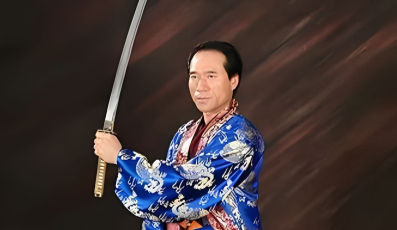
Mestre Anderson Scaldaferri Brazil Kummooyeh Federation


Conversation with a Young Sul Choy Student
In the late 90s, Master Mike Wollmershauser (1943-2002) recorded a historic interview on video with one of the most respected Hapkido masters in the world, the legendary Master Chung Kee Tae. Master Chung was also a pioneering high-ranking master, highly regarded worldwide in Taekwondo, and at the time of the interview, he was very ill with severe kidney problems.
Master Mike Wollmershauser: Mr. is your name Chung Kee Tae?
Yes! Grandmaster Chung Kee Tae.
Where and when were you born?
I was born in the city of Taegu, Korea, on July 25, 1939.
I understand you were promoted by Yong Sul Choi. To what rank?
6th Dan.
So, you are a 6th Dan, officially promoted by Yong Sul Choi?
Yes.
Did you move from the city of Taegu, Korea to Canada?
Yes, I came to Canada and founded the Canadian Hapkido Association to help the Canadian people have a place, an organization, to better practice and teach Hapkido, and also thinking about the future.
Okay, this happened. Now I would like to go back in time.
Did you study other martial arts?
I first practiced Tae So Do. Before Tae Soo Do, I practiced Yusul.
What does Tae Soo Do mean?
It means the art of foot and hand.
Something like Taekwondo?
Many, many years later, the name was changed and was called Taekwondo.
You mentioned Yu Sul? Was it something like Judo or Yudo?
Yes, Yu Sul Kwan. Yu means something like throwing technique.
Have you ever heard of Hapkido being called Yawara?
Oh, yes! It was first called Yawara. In fact, there were several names, but the first name given by Yong Sul Choi was Yawara, then Kido, and later Hapkido. Choi once told some Christian people that Kido means prayer. This Kido name was not a good name for a martial art. So the grandmaster chose the definitive name Hapkido for the art.
In what year did they start using the name Hapkido?
I think it was in 1959 or the end of 1958. I remember Yawara was the first organization formed. After that, Yu Kwan Sul, and then we tried to form the Kido organization, but Yong Sul Choi reversed it and kept the name Hapkido since then. In fact, many people wanted the Kido Association. The first meeting we held was in Seoul. We only had one meeting in Seoul at that time. It was at Master Shin's martial arts school, our first meeting, where the art was called Hapkido. The masters who were present were, among others, Jung Moo Ee, Master Ga, Master Kee Moo Hoo and his club, practically all black belts of Hapkido were at this meeting, including those from the city of Pusan, and also from schools in other regions.
Was this meeting convened by Yong Sul Choi or Ji Han Jae?
No, no, no. The meeting was convened by Yong Sul Choi and not by Ji Han Jae.
Who was your Yu Sul teacher?
His name was Kang, Moon Jung. He came to my school and first taught me Yu Sul, which later became known as Hapkido.
Did you practice a long time ago?
Yes, it was a long time ago, 1956 or 1957.
Did he practice with Master Choi? Is he in any of these photos?
I know his name was Kang (Wollmershauser shows the photos to Chung).
Is he in any of these?
Chung carefully examines the photos and says: I don’t know, it was a long time ago, almost 40 years. I remember Kang visited the club; there were 15 or 18 students, and I was an assistant teaching Taekwondo. He visited the club and started teaching Yu Sul. This was before the name was called Hapkido.
Was this the first time you saw the art? Were you impressed?
Oh! Yes, very much. I felt that the art impressed me a lot. I wanted to learn more, and I heard there was a mysterious man. I was a teenager, and Kang was talking about an instructor in the city of Taegu, Korea, but the name he mentioned I didn’t know. He said there was an unusual technique that, when applied to a person who grabs, would finish them instantly.
I wanted to find this man to teach me; I was very interested in learning. Everyone tried to locate him, but no one knew or remembered where he was. There was a rumor that he had a technique, a touch of a finger, and the opponent would be finished. I wanted to learn, I really wanted to learn immediately. Someone said they knew something about locating him and asked, “Do you want to buy me lunch?” I said I’d buy him lunch. A good deal! Yes, so we went to that part of the city.
I don’t remember the name of the street. I was with Kang, Moon Jung. Together, we approached the door of the club. I heard noise inside, and I began trying to look through the small crack in the door, which was slightly open. Then I heard a scream of pain, “Ahh,” which made me very nervous because of the reputation of the finger touch technique and finishing. We tried to get closer to look better, and then someone big inside screamed again, “Ahh,” very loudly! We ran out of the building.
How old were you?
We were about 16 years old. I ran away because I was so nervous. Later, we went back a second time. I really wanted to watch. I saw a guy grab the master’s dobok by the top. The master came around to this side (C.K.T. demonstrates, bringing his elbow over the arm, twisting the hand) and the person went to the ground, sat down with a loud noise, and couldn’t get up. I was nervous and ran away again, went home, and kept dreaming about how I could learn the finger touch and finish. I was very interested in it.
Were you already a black belt?
I was a black belt in Taekwondo; I was sixteen or seventeen. Someone said the club didn’t have many students, so I started practicing and found that the more I learned, the more I wanted to learn. Techniques such as advanced techniques, superior to any other self-defense techniques I had ever seen. Still, pressure points, the touch of a finger, and finishing were still on my mind. One by one, the master taught in very special classes. His name was Yong Sul Choi. I believe he was in his early 50s at that time.
Almost like a private class?
Yes, and very expensive. He taught one student at a time; there was a curtain so no one could see. Obviously, the next student was ready to enter. Now I remember for sure, I learned Taekwondo and Yudo before coming to the Yawara Club. A month of lessons, and the fee was five or ten times higher than other martial arts; in just one lesson, you could feel a lot and almost couldn’t use your hands.
I was so nervous. Then, at Yong Sul Choi’s Dojang, he had a small ball hanging from the ceiling at head height, and the student would kick the ball. They practiced many types of kicks, but the most usual at that time was the front kick; it felt like a whip, like an axe. This was the first time I saw this type of kick, because the kicks used in other arts were circular kicks, and the most common was still the side kick.
What year was this?
1956. The people who practiced these kicks were around 23 or 24 years old, and I watched a variety of different kicks. On the other hand, look how interesting it was; a grip and pain, pressure points here, pressure points there, it wasn’t like the kicks and punches in Taekwondo. The assistant instructor, the master, once he applied the techniques, the person would be unable to practice for about two weeks due to intense pain.
The master would teach me, and I would teach my students, and this is how I tested the techniques. So, because of this, I started teaching both Taekwondo and Hapkido techniques, so they were learning techniques for wrist, shoulder, and back grips, as well as plexus attacks.
Was Suh Bok Sup at the dojang during this time?
While I was there, I heard about Suh Bok Sup, but I never saw him at the Taegu Hapkido Dojang. Later, I met him on several occasions.
I understand you practiced Hapkido until you went to military service. When did you join the army?
I went into the army in 1959.
How many years did you serve in the army?
A little over 3 years, until 1962.
Did you teach Hapkido in the army?
I taught Taekwondo and a little Hapkido.
Which military base did you teach at in Korea?
8th Army Division, Oul Jee Ro Base, located in Seoul, later in Hum Chung.
After you completed your military service, what did you do?
I moved to Seoul and opened a Dojang. The name of the Dojang was Jae iLL Hapkido.
What does Jae iLL Hapkido mean?
Jae iLL means 1st Hapkido Club.
When did you open the Dojang?
1965 or 1966.
What did you do between 1962 and 1966?
I started my business, Jong Am Dong Corporation. My house was next to a mountain. I was teaching 6 or 7 students. I was also teaching university students from Kwung Hi University.
Who was the first black belt you promoted?
His name was Kim Yong Sool. He was a university student.
Who was your first student in Canada?
John Tefner. He now lives in the Los Angeles area, and I believe he is a minister.
Who is your chief instructor now?
David Murray from New Brunswick, Canada. He is 6th dan in Taekwondo and 5th dan in Hapkido. He is my highest-ranked in Hapkido and the interim President of the Canadian Hapkido Association.
Lee, Hong Bok first studied with me in 1973 when I moved to Toronto. Then, there was a problem. General Choi had moved about 40 minutes away and told me to move to the United States or somewhere else because he wanted the area for his student Park Jong Soo. He then called me to meet Park Jong Soo. I told him I had the Hapkido Police Association all over that area, and it was registered with the Canadian Government.
Now, back to Korea. General Choi was a man of much influence in 1964. At that time, the general told me he was going to publish a Taekwondo book and wanted to see the self-defense techniques of Hapkido. General Choi, I, and other masters met at a military base, and I demonstrated many types of grips, including those against weapons.
When the general conducted his first training and instructor formation course in the 1960s, he came to my house and told me I was a good Taekwondo instructor. He wanted to include specific self-defense techniques from Hapkido in his book because Taekwondo was more specifically known for its kicks and punches. General Choi made Taekwondo very big in South Korea. He trained and certified military and civilian instructors internationally, taught the beautiful forms he developed, including Taekwondo for competition, and sent them all over the world to establish powerful Taekwondo schools.
The general then told me I could choose anywhere I wanted to teach. He said the United States, Canada; I chose Canada. That’s where I have my home. When I first came to Canada, my school offered classes in Yudo, Hapkido, and Taekwondo. Nearby, there was a Japanese Judo school. The Japanese instructor asked me to attend a Yudo class because he wanted to see the difference between Japanese Judo and Korean Yudo. I had practiced Yudo in junior school, so when I demonstrated to this Japanese instructor, I combined Yudo and Hapkido.
Immediately, I would defeat this instructor. He asked me, “What do you use in these Yudo techniques that cause me so much pain?” I told him I was a very happy man to have learned from the best Hapkido, directly from the founder, Grandmaster Yong Sul Choi. He said, “I’ve never seen anything as devastating as this art.” The instructor said he wanted this kind of knowledge to give to his students and asked me to teach him. It was very interesting how Taekwondo acquired Hapkido techniques and how Hapkido gained the respect of Japanese masters when they were exposed to the devastating techniques.
Let's go back to when General Choi spoke to you about incorporating Hapkido techniques into Taekwondo. At what level of Taekwondo were the techniques introduced?
General Choi said it was a good idea to have basic self-defense techniques from Hapkido in his Taekwondo program. I don’t know at what level he wanted to introduce the techniques; he just wanted to show self-defense techniques in his book for Taekwondo practitioners. General Choi is a very intelligent person, he wanted to help his people, and he wanted to show self-defense techniques in Taekwondo.
There were instructors who had never seen these types of techniques, only kicks, punches, jumping kicks, breaking, and forms. In 1969, General Choi began preparing his Taekwondo book edition, and he took many photos of me practicing Hapkido techniques to be published in his book in Korea, which was first published in 1972. General Choi told me that, as a first-generation teacher, he then asked me where I would like to teach Taekwondo and Hapkido, and I told him in Canada, where I opened my first school in 1973.
Master Mike came to my school and met with me for the first time in 1974. General Choi asked him to teach Hapkido to the masters and spoke about incorporating Hapkido techniques into Taekwondo.
Did General Choi include Hapkido techniques in his book as a requirement for Taekwondo black belts?
General Choi included these techniques in his Taekwondo book for the people of Taekwondo, that is, to help Taekwondo instructors understand more about self-defense. Most masters, instructors, and students know that there are self-defense techniques in Taekwondo, but they are not aware that most of these techniques come from Hapkido.
What do you remember the late Grandmaster Yong Sul Choi said about his master in Japan?
When Grandmaster Yong Sul Choi spoke about his master, Sokaku Takeda, he said he learned like anyone else. He had to clean the school, learn to sit properly, observe, but not practice.
For six months, Yong Sul Choi cleaned, sat, and observed. It wasn’t like today, when you pay and practice in classes. After six months of living in the Dojang and doing everything for his master, his master finally agreed to teach him.
Translation by Mr. Costa, a dedicated, studious, and intense researcher of Korean martial arts.